
William M. Heath, Allen County, Kentucky’s Best-Known Gunsmith ©
Foreword: An earlier blog article titled “Kentucky’s Heath Family and Their Tennessee Style Rifles” examined the Heath family gunmakers of Allen County, Kentucky, just above the Tennessee state line. Three Heath brothers, William, James, and Daniel, made guns at Scottsville, the county seat, for many years. William was the most prolific and best-known percussion era gunsmith in Allen County and local citizens referred to him as “Gunsmith Billy” Heath. Three new William Heath rifles have appeared since the first blog article was posted, providing readers with a visual display of his earliest to latest rifles.
The Heath Family: William Heath’s father, Richmond R. Heath (1805-1879), was born in Virginia where he learned the gunsmith’s trade, married Sarah Milan in 1825, and moved to Campbell County, Tennessee, in 1830. He didn’t stay long, since he was in Grainger County in 1831, Jefferson County in 1832, and finally settled permanently in Sumner County north of Nashville in 1842 just below the Tennessee/Kentucky state line. Richmond trained his five sons as gunsmiths, with the three oldest sons moving north into Allen County, Kentucky, in the 1850s. Those sons were William “Billy” McKendree Heath, John Marshall Heath, and Daniel M. Heath. William and John were known for making slim, half-stocked rifles with Tennessee influences in Allen County, while Daniel made a few guns but did primarily blacksmithing work. The Heaths’ rifles were so similar in appearance that only the barrel signature could identify which brother made a particular gun.
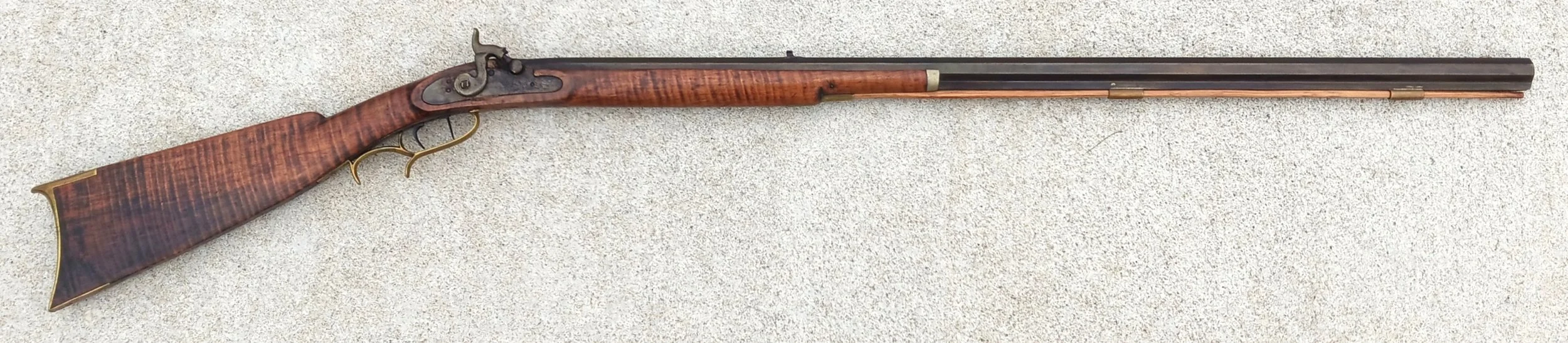
Figure No.1: This is the earliest of the four illustrated William Heath rifles from Allen County, Kentucky, with the flattest butt plate made circa 1850. The barrel is shorter than expected for his early work, but it is full original length. The gun is stocked in good curly maple with Heath’s slightly “stepped” wrist and the nose cap set about four to five inches past the rear ramrod pipe. Note the flatness of the butt plate and ovality of the guard that indicate an early rifle by Heath. Barrel: 36-1/8 inches with .38 caliber bore. Author’s collection, photos by author.
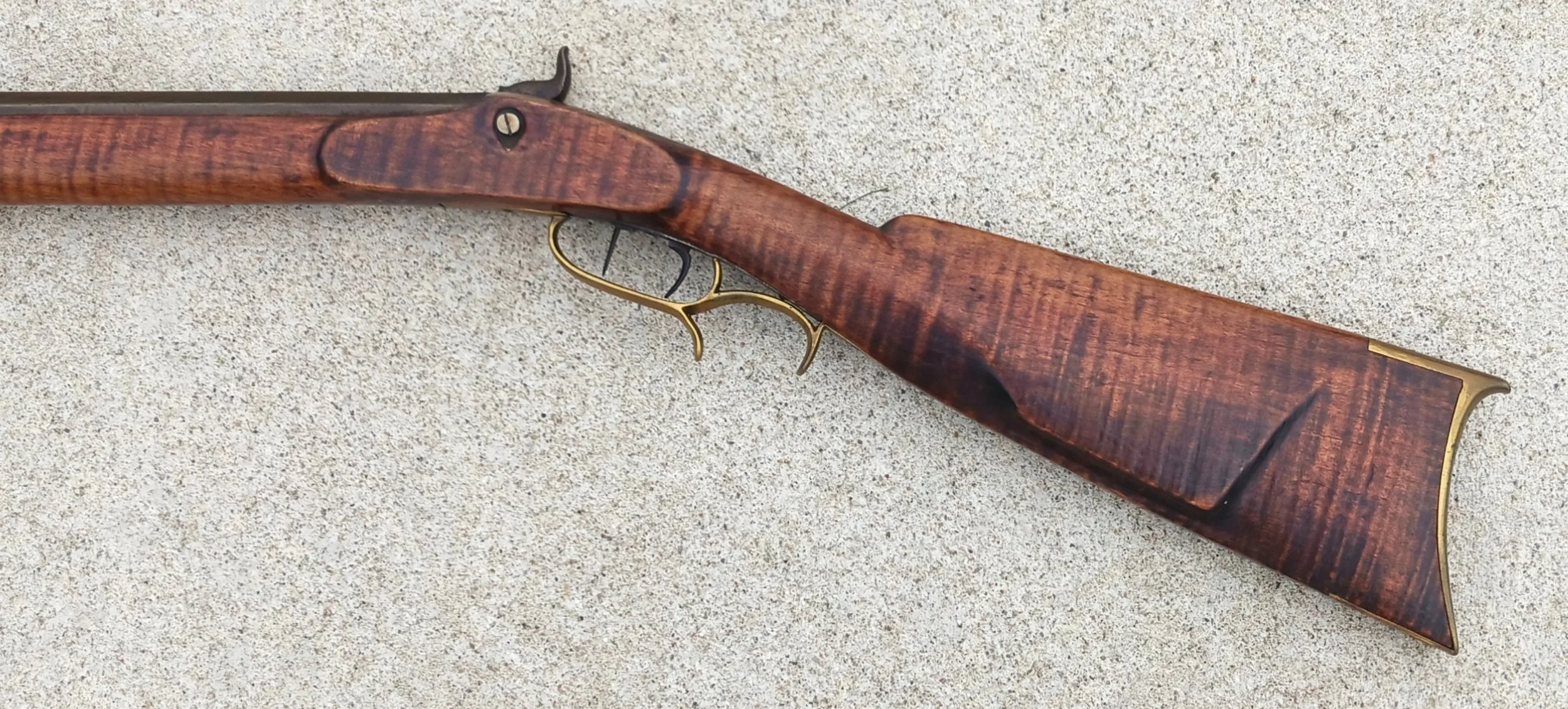
Figure No.2: The back of the early Heath rifle has a large, “chunky” cheekpiece that runs almost to the bottom of the stock. The guard has a “square shoulder” above the rear spur, and the tang is 2-3/4 inches long with a single bolt. Author’s collection, photo by author.
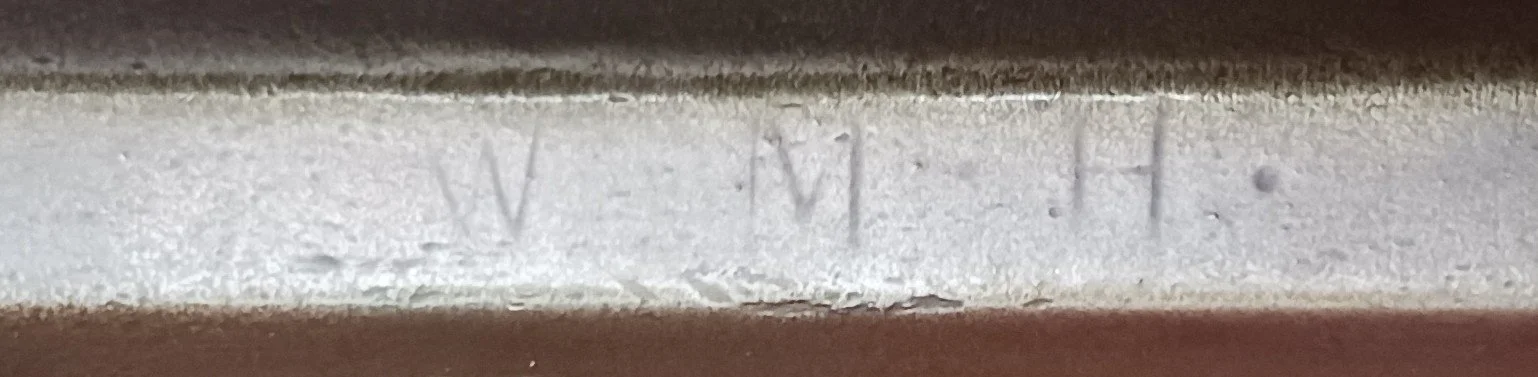
Figure No.3: William Heath consistently signed his early barrels with three large initials. This signature is worn and not as sharp/clear as most Heath signatures with only a single punch mark visible after the last initial. Author’s collection, photo by author.
William Heath: William was the oldest of the Kentucky Heath brothers, born in Virginia on February 7, 1826, and moved with his family to Tennessee in 1830 where he learned the gunsmith’s trade from his father, Richmond Heath. About 1848 William moved north across the state line into nearby Allen County, Kentucky, where he opened a gun shop in Scottsville, the county seat. He married Sarah Francis Miller (1826-1890) in 1849, raised a large family, and died on December 14, 1890. William accumulated land while working as a gunsmith, and later in life he farmed in addition to working in his gun shop. He and his wife Sarah both died in 1890 and were buried in the Union Chapel Cemetery at Scottsville.
William Heath Rifles: William made most of the known Heath rifles, due in large part to his younger brother John working in William’s shop and building rifles for several years after his arrival in Scottsville but not signing rifles until later when he opened his own gun shop. An old recollection stated that all rifles made in William’s shop had his initials on the barrel, regardless of who in the shop made the rifle. William used both walnut and maple for his stocks and signed his guns with his three initials, “W M H,” in large block letters. The earliest of his four study rifles dates to about 1850 and appears in Figures No. 1, No.2, and No. 3 above with his three-initial signature. A second rifle with a later style guard was made a few years later around 1855 and is shown in Figures No.4, No.5 and No.6 below.
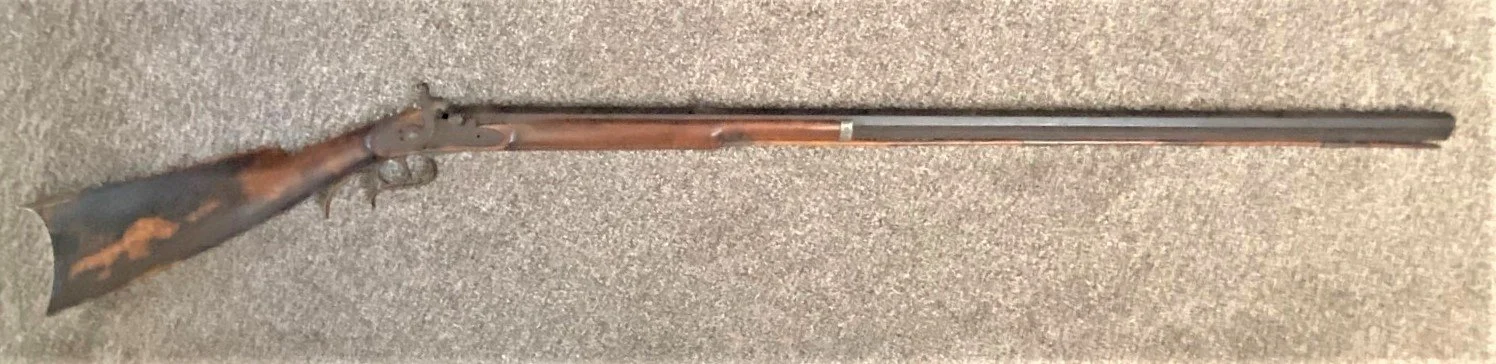
Figure No.4: This William Heath rifle is a few years later than the first ca. 1850 rifle, based on its later guard style and more curvature in the butt plate. The rifle’s nose cap still sits four or five inches past the rear ramrod pipe, and the rear sight is located about an inch behind the rear pipe in Heath’s normal style. The barrel is original length with evenly spaced ramrod pipes. The hefty side-facings hint at Tennessee influences, yet the side-facings are tight around the lock in Kentucky style. Barrel: 38-1/2 inches with .32 cal. bore. Photo & gun courtesy J. Carter.
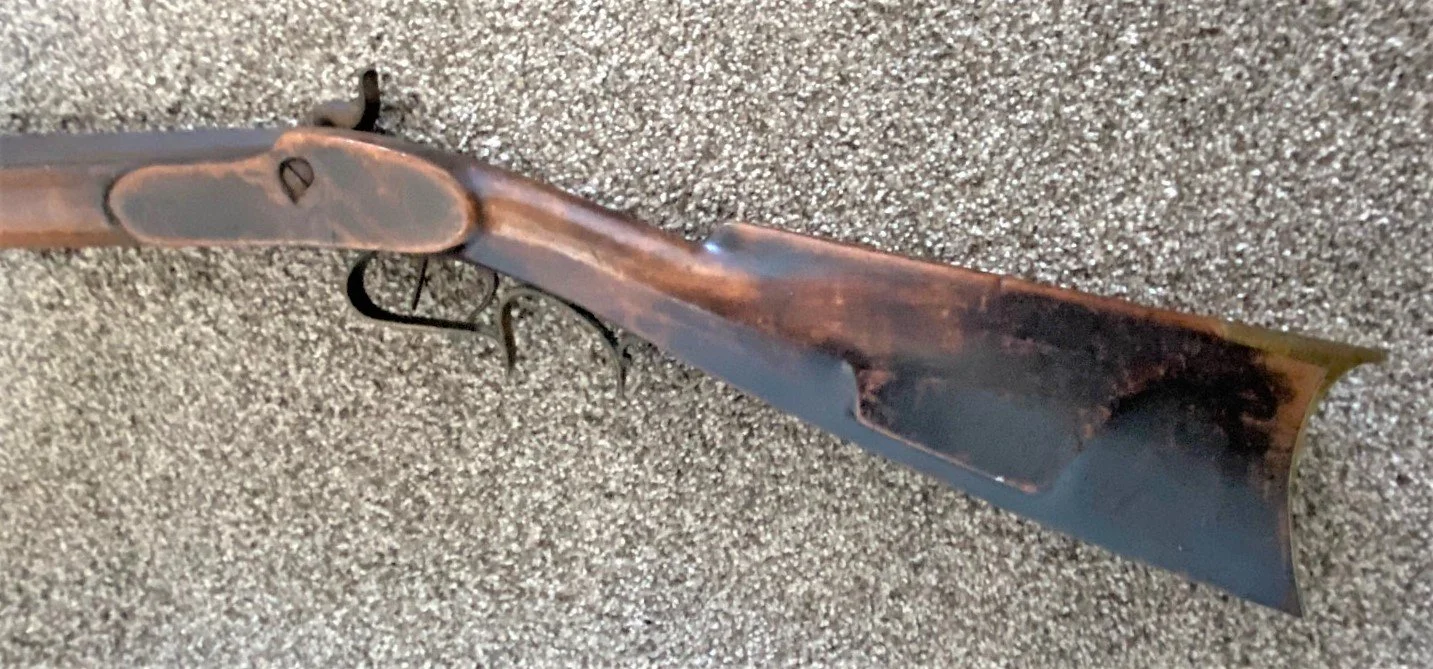
Figure No.5: The back of the second Heath rifle is similar to the first rifle, but the cheekpiece is a bit sharper and the guard a later style. The gun survives in good condition, despite the butt’s front side getting a bad scrape in the original finish. Courtesy J. Carter.
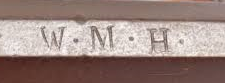
Figure No.6: William Heath marked his barrels with his three initials that appear stamped on this rifle but may have been engraved on early rifles. His middle name was “Meridith” and oddly, all three Heath brother gunsmiths had the middle initial “M.” This barrel stamp is clear with dots after each letter, but some William Heath barrel marks were more lightly struck and appear rather faint today. Courtesy J. Carter
William’s rifles look so similar that an explanation is needed to identify his earlier work from his later guns. He began working in 1848 in the mid-percussion era, and all his rifles known to the author are half-stocked guns. That doesn’t mean he never made a full-stocked rifle, but if he did, it was early in his career and there was little demand for them, i.e., only a few made. The author dates the earliest study rifle to the early 1850s and the second study rifle to the mid-1850s based on their flatter butt plates, heavier cheekpieces, and longer distance between the nose cap and rear ramrod pipe. The most noticeable change between the first and second study rifles is their guard shape, with the early rifle’s guard having an oval bow and Kentucky “square shoulder” above the rear spur, while the second rifle dates about five years later with a later style “square back” guard and rear spur. The third illustrated study rifle in Figures No.7, No.8 and No.9 probably dates to the late 1850s based on its shortened forestock with noticeably less distance between the nose cap and rear ramrod pipe, plus a bit more curvature in the butt plate. However, the gun has an attractive upgrade with its brass cap box that was rarely used on Heath rifles from Kentucky.

Figure No.7: This William Heath rifle dates to the late 1850s but looks earlier due to its brass cap box in the butt and long barrel. Heath’s “stepped” wrist is visible here, but it disappears on his later guns. A key detail on this rifle is the shortened forestock space between the rear pipe and nose cap that indicates a later gun than the first two rifles. On later guns, the brass rear pipe was replaced with a conventional cast pewter nose cap that served as the rear/entry pipe. Barrel: 38 inches with .32 caliber bore. Photo courtesy R. Koppel.
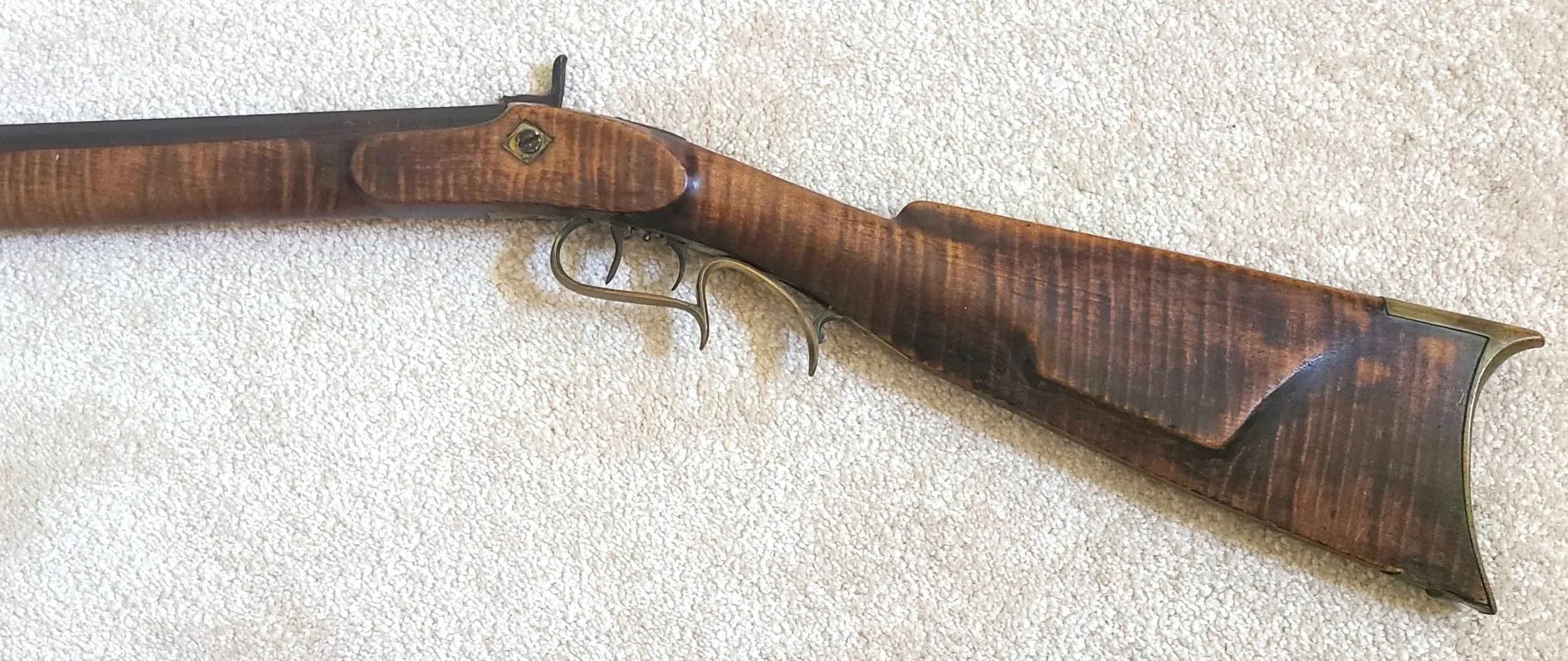
Figure No.8: The back of the third study rifle strongly resembles the earlier Heath rifles in architecture, with only minor changes in a larger lock bolt washer and more defined cheekpiece that sits slightly higher on the butt. Photo courtesy R. Koppel.
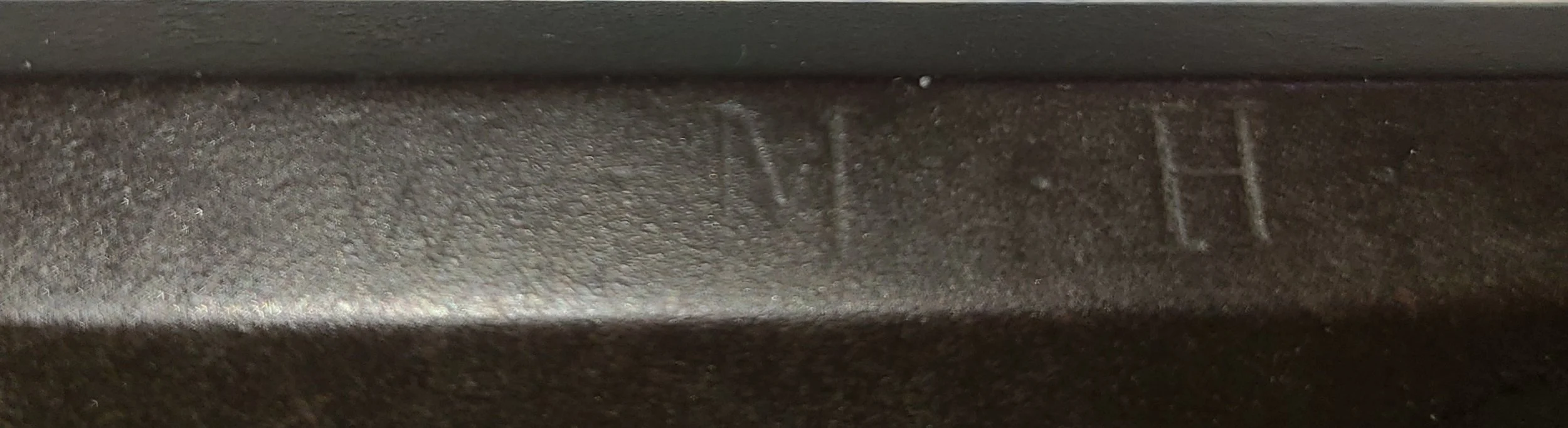
Figure No.9: The barrel signature on the third study rifle has dots after each letter but looks very similar to Heath’s earlier barrel marks. The initials may be engraved on early rifles, but on later rifles they were stamped. Stamped initials show small differences from gun to gun, suggesting long and short stamps were used to create each letter. Photo courtesy R. Koppel.
An interesting detail on William Heath rifles is their apparent curve or “fish belly” in the lower butt line. When closely examined, it is not a true “fish belly.” Rather, the lower butt line is relatively straight as expected on a Kentucky gun, but the wrist is “stepped” or curved upward a bit, giving the lower butt line a “curved” look when in fact the viewer is seeing a slight break where the stepped wrist begins to bend upward. After the Civil War, Heath rifles lost the “stepped wrist” look, making their lower butt lines look straight compared to earlier Heath rifles. In addition, the earlier Kentucky-style nose cap located four or five inches past the rear pipe had slowly moved back until it was replaced by a conventional cast pewter nose cap that served as the rear/entry ramrod pipe. These later Heath rifle details can be seen on the fourth study rifle in Figure No.6 below that dates to after the Civil War.
Heath Gun Shop: William Heath opened his gun shop in Scottsville in 1848 soon after he arrived. His younger brother James followed him from Tennessee in 1850 and worked as a journeyman in William’s shop for several years before marrying a local woman and opening his own shop in Scottsville. Brother Benjamin joined the shop a few years later, but he worked primarily as a blacksmith. An early apprentice of William Heath was Hezekiah C. Cook, who finished his training in 1856 and remained with Heath as a journeyman for many years. In the 1860 census, a man named Benjamin A. Williams, occupation “Gun Smith,” was living in the William Heath household and working with William. Williams was born in 1836 and probably apprenticed under Heath, then remained as a journeyman in the shop for a few years until he married in 1861 and moved to Bowling Green in Warren County, Kentucky, to work. Heath was listed as a “Gun Smith” in several censuses, but by 1880 he was listed as a “Farmer” despite still being involved with his gun shop. Heath’s journeyman Hezekiah Cook apparently becoming Heath’s partner in later years as Heath began spending more time farming. Cook’s son, J. D. Cook, also apprenticed in the shop and remained as a journeyman through the late 1800s. When Heath died in 1900, Hezekiah Cook took over the gun shop and did primarily gun repair work until his death in 1903.

Figure No.10: The last study rifle was probably made in the late 1860s after the Civil War. It exhibits several significant changes from the earlier Heath rifles. While the barrel remains long in true Kentucky fashion, the gun now has a conventional cast pewter nose cap/entry pipe, the side-facings around the lock are not a perfectly oval, and the lower butt line is straight without a visible “stepped” wrist. A final detail suggesting a later rifle is the walnut stock that replaced the curly maple used on earlier guns. Private collection.
Summary: William Heath was Allen County’s best-known gunsmith working in the second half of the nineteenth century. He was trained in Tennessee and after reaching adulthood moved north across the state line into Allen County, Kentucky, where he worked for the rest of his life. Two younger brothers, James and Daniel, followed him to Kentucky and worked in William’s shop until after they were married. All Heath rifles were very similar due to William’s strong influence on his brothers during their first years in Kentucky. An intriguing detail in half-stocked Heath rifles from Kentucky is their lack of a forestock barrel pin, leaving some observers wondering how the stock was attached to the barrel. When disassembled, a hidden pin is seen imbedded in the pewter nose cap that catches an open-ended barrel loop or tab on the end of the under-rib when the barrel is slid back into place. Allen County was rural and not a major gun producing center in Kentucky, but the Heaths left a number of good quality rifles with touches of their Tennessee training, well-stocked but rather plain, and all with the enigma of “where is the forestock barrel pin?’