
Willis F. Settle’s “1856” Rifle with a Full Patchbox ©
Foreword: Second and third generation Settle family gunmakers in Kentucky made primarily half-stocked rifles of good workmanship but minimal decoration. Capboxes were seldom used and patchboxes non-existent. Recently the unexpected happened… a well-marked Willis F. Settle rifle in good condition appeared at auction with a brass patchbox. The patchbox was a later style design as seen in Figure No.1 below. It was probably a commercially available patchbox that was purchased along with the gun’s other mountings, but regardless of its origin, it was the first patchbox the author had ever seen on a mid-1850s Settle rifle.
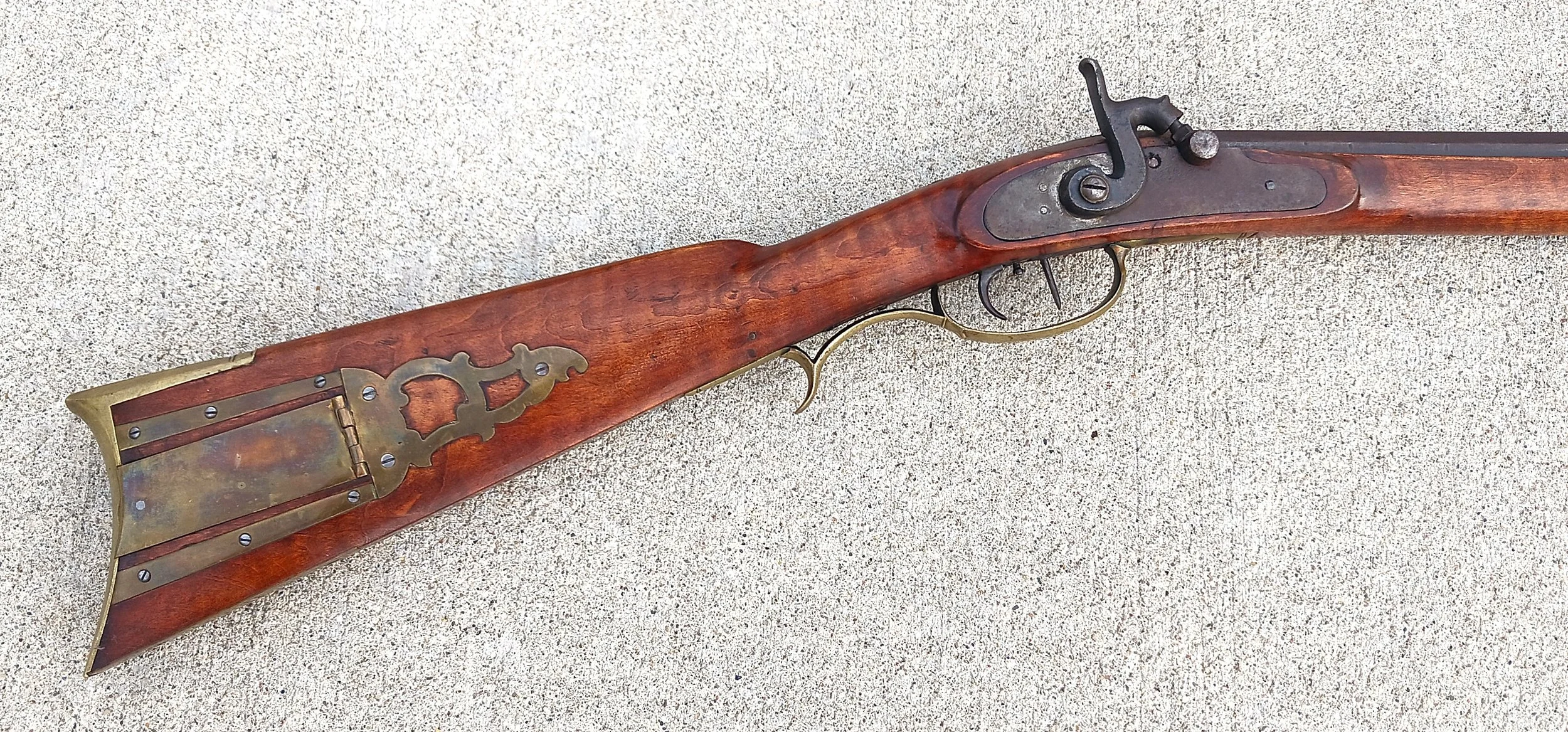
Figure No.1: The fresh Willis F. Settle half-stocked rifle surprised Kentucky collectors with its unexpected patchbox. The rare presence of a patchbox suggested the gun was higher priced than most Settle rifles of the 1850s and probably requested by a wealthy customer. The patchbox has late style separated side-leaves that expose a gap of wood between them and the lid. The late mid-1850s date suggests the patchbox was likely purchased by Willis Settle when he bought the gun’s other mountings.
Willis Franklin Settle: Willis (1826-1892) was a third-generation Settle gunmaker. His grandfather was William Settle (1770-1808), the original Settle gunmaker in Kentucky, who left Virginia and settled in Barren County, Kentucky, in 1798 and became noted for long barreled, unadorned rifles with barrels hammered out of the iron rims on old wagon wheels. He died prematurely from smallpox in 1808, but his son Felix (1801-1871) carried on the gunsmithing trade in Barren County. Felix had two sons who became Kentucky gunsmiths, Simon (1823-1871) and Willis Settle. Willis remained in Barren County to work as a gunsmith, while older brother Simon moved to nearby Greene County.
Willis learned the trade from his father, Felix Settle, at Roseville in Barren County. After reaching journeyman status in 1846, he moved to Glasgow in Barren County and later moved on to Hiseville in Barren County. He stamped his guns “W. F. Settle” and often added the town name and date after his stamp. Civil War years were difficult for Willis due to his southern sympathies. Union troops passing through Barren County burned his gun shop, destroyed his tools, and chased him out of town. He later moved to Russellville in Logan County where he continued to work as a gunsmith in addition to carriage-making and blacksmithing. About 1878 he moved to Russellville, Arkansas, where he died in 1892.

Figure No.2: This view of the Willis Settle rifle with patchbox shows its slim, clean Kentucky architecture that Willis used on his earlier rifles. Here the cast nose cap sits several inches past the brass rear ramrod pipe in Kentucky style; by the 1860s most Settle gunmakers had changed to the larger cast nose cap that served as the rear ramrod pipe. Stock wood is lightly curled maple, and the brass hardware including the patchbox was purchased in at a hardware store. Barrel: 40 inches long with .32 caliber bore, 7-groove rifling. Author’s collection.
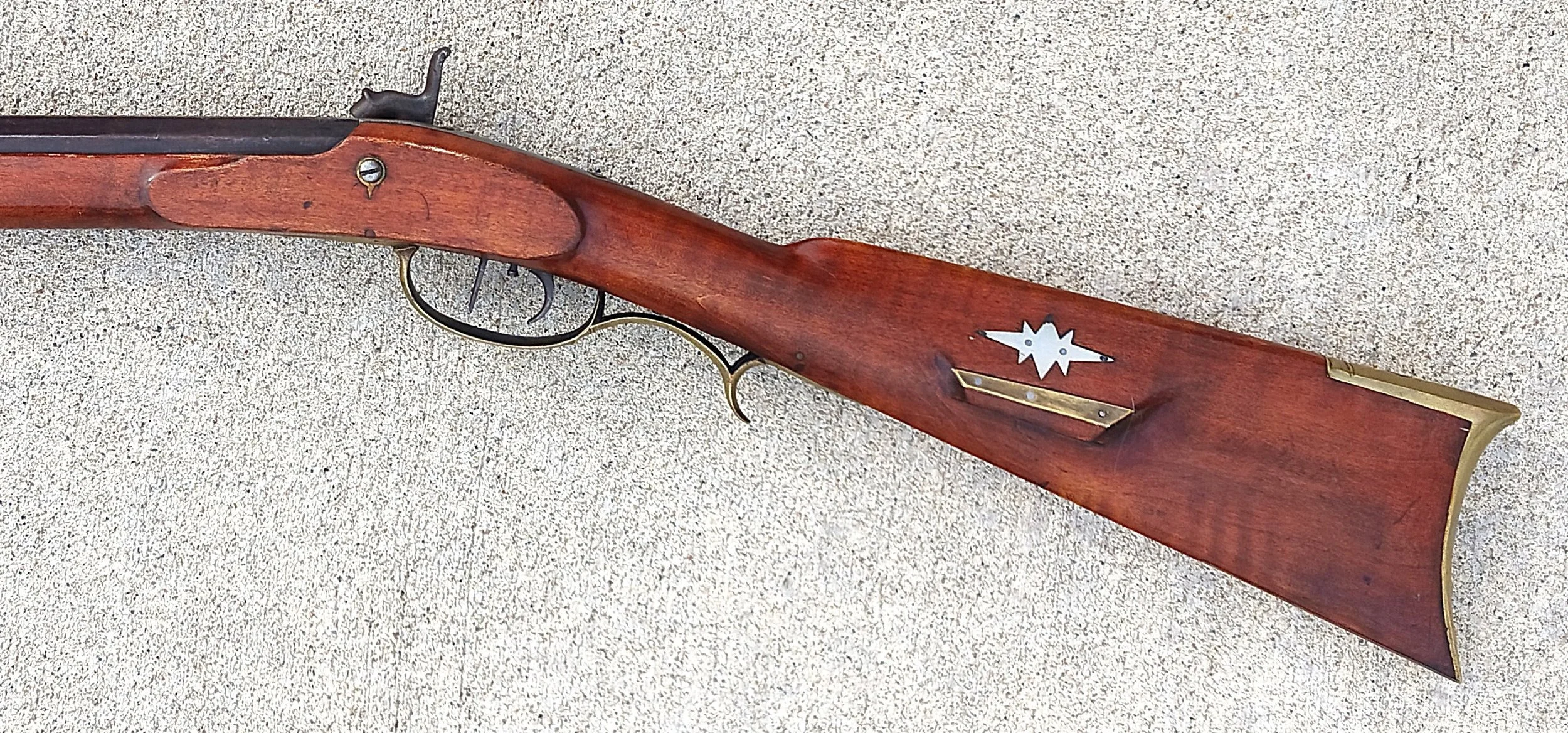
Figure No.3: The back of the Willis Settle rifle has another unexpected surprise with its silver star and brass strip inlays in the cheekpiece. Those details are almost never seen on a Settle rifle and suggest it was made for a more demanding customer.
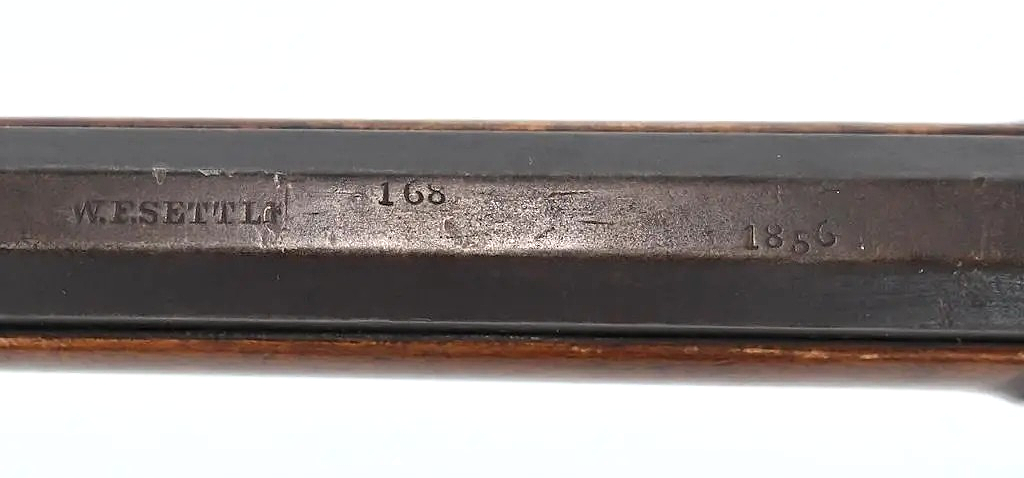
Figure No.4: The new rifle has Willis’ typical barrel stamp, “W. F. Settle,” followed by his production number “168” and date of “1856.” Many of Willis’ rifles also have the town name of “Roseville” or “Hiseville” following his name. Author’s collection, photos by author.
Patchbox Rifle: The Willis Settle rifle appears in Figures No.2 and No.3 along with its lengthy barrel signature in Figure No.4. The barrel is stamped “W. F. Settle” followed by his “168” production number and “1856” date. The date indicates Willis made the rifle when he was 30 years old and working at Hiseville in Barren County. The half-stocked gun is a typical of most mid-1800s Settle rifles, except for the rare embellishments on the front and back sides of the butt. Both the patchbox in Figure No.5 and the cheekpiece inlays in Figure No.6 are unexpected and highly unusual for a Settle rifle of this era.
The rifle’s wood and brass surfaces are clean and smooth due to the rifle being professionally refinished many years ago by its prior owner, who later scratched an identification number on the barrel’s under-rib just beyond the nose cap. Despite the gun’s cleaned surfaces, the patchbox cavity is dark and dirty, as is the ramrod channel under the nose cap and the mortise under the lock plate. The unexpected cheekpiece enhancements on the butt’s backside complement the patchbox on the front and suggest the rifle was made for a discerning owner who wanted more than just the standard Settle rifle… perhaps for bragging rights in his neighborhood.
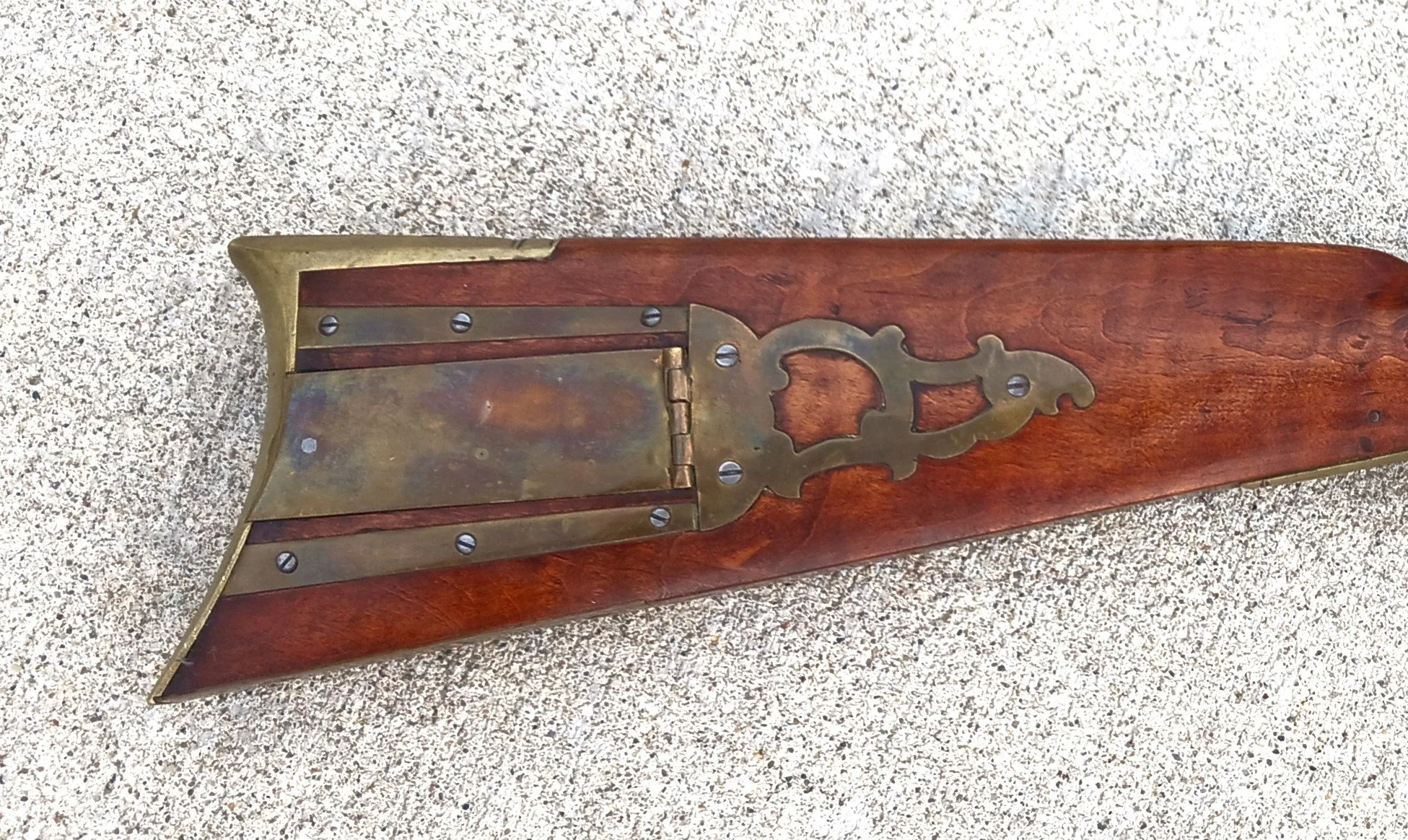
Figure No.5: Willis Settle’s patchbox is a later style box appropriate for an “1856” dated rifle, with separated strips for side leaves and no engraving. All brass surfaces have been cleaned including the patchbox, but small bits of oxidation are still present in some places around its perimeter.
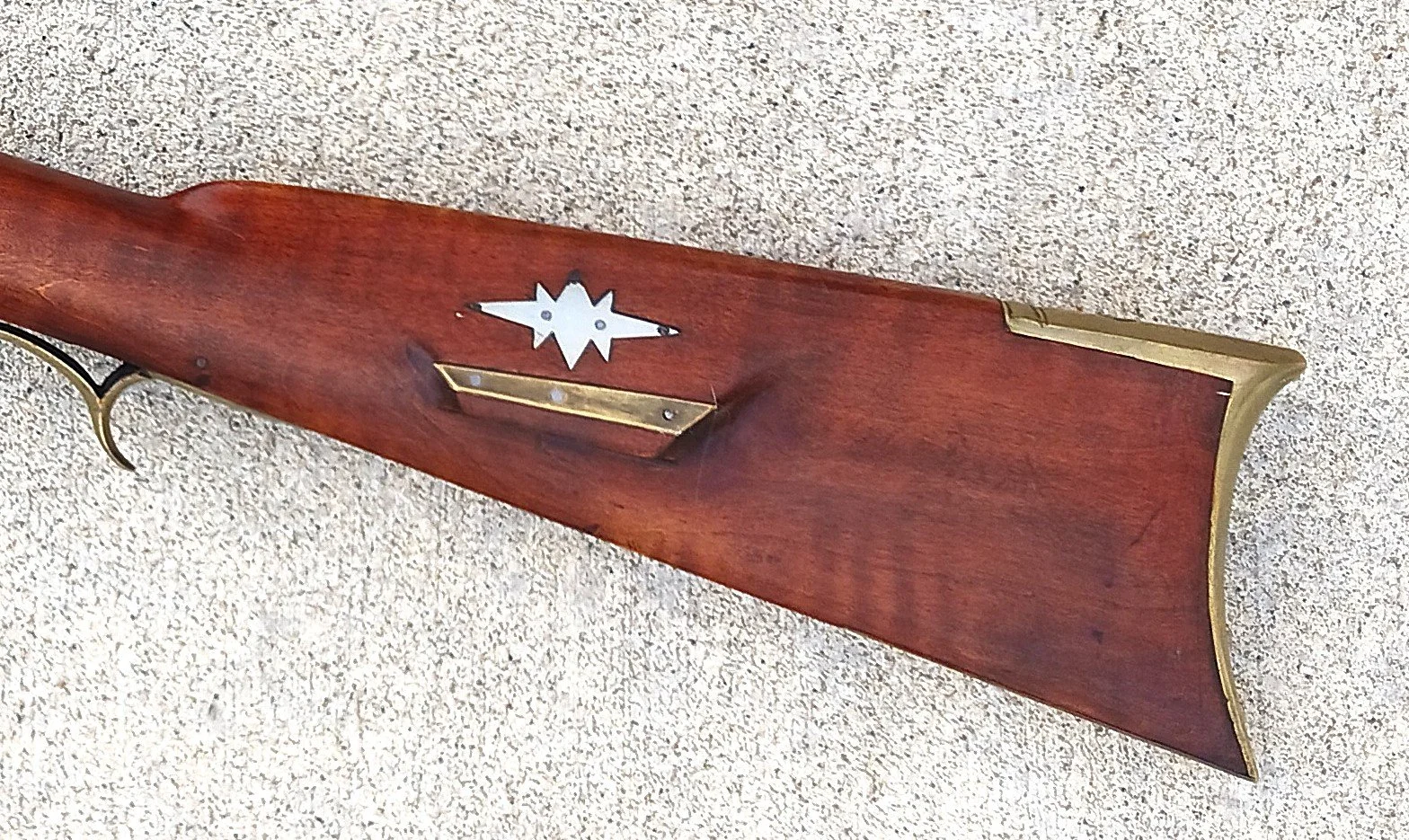
Figure No.6: The cheekpiece on the Settle rifle is “heavily” decorated by Settle standards, with a silver 8-pointed star and brass strip across its base, but neither inlay is engraved. Cheekpieces are found on earlier Settle rifles, but a majority of the later Settle rifles have a “shotgun” style butt without a cheekpiece.
The rifle is long and slim in true Kentucky style and feels almost delicate when picked up and shouldered. It was well taken care of during its working life and has survived in excellent, undamaged condition with an older refinish. In addition to the unexpected upgrades on both sides of the rifle’s butt, several other details are above average for a Settle rifle. The brass butt plate return has an attractively filed tip seen in Figure No.7, and the gun’s toe plate in Figure No.8 has a triangular finial when most Settle toe plates had flat ends. Two other small details also deserve a comment. The rifle’s rear ramrod pipe is nicely filed behind the small cast nose cap in Figure No.9, and the trigger guard in Figure No.10 is nicely shaped and mounted in southern fashion with a pin in the tail and wood screw in the front extension. These small details help make the rifle more attractive and a step above the average mid-1850s Settle rifle, suggesting the rifle was made for a wealthier customer who wanted his rifle to stand out from the crowd. It should be noted that the patchbox is unengraved, which was a common practice on later Midwestern rifles.
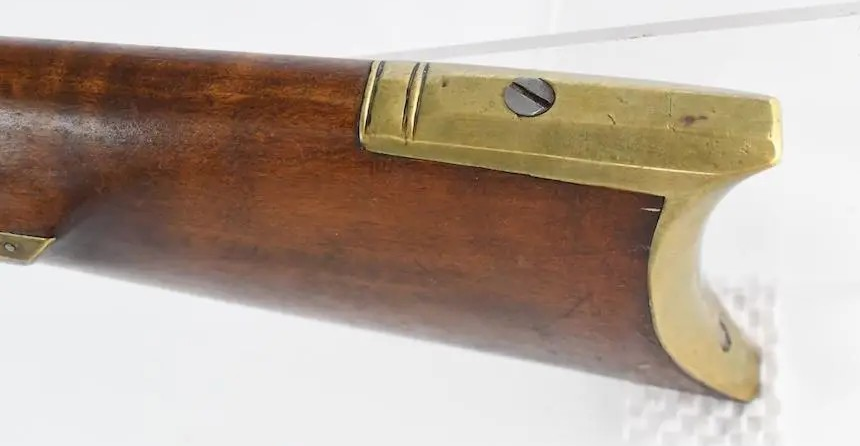
Figure No.7: The Settle rifle’s butt plate return on top of the comb is cleanly faceted and ends in a nicely filed pattern. Most mid-century Settle rifles have rounded returns without decorative facets or filings.
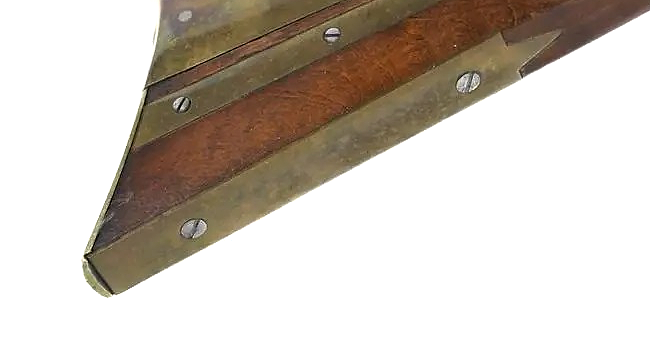
Figure No. 8: The toe plate on the Willis Settle rifle has a small, pointed finial at the end, making it more decorative than the standard rectangular toe plates on most other Settle rifles of that era.
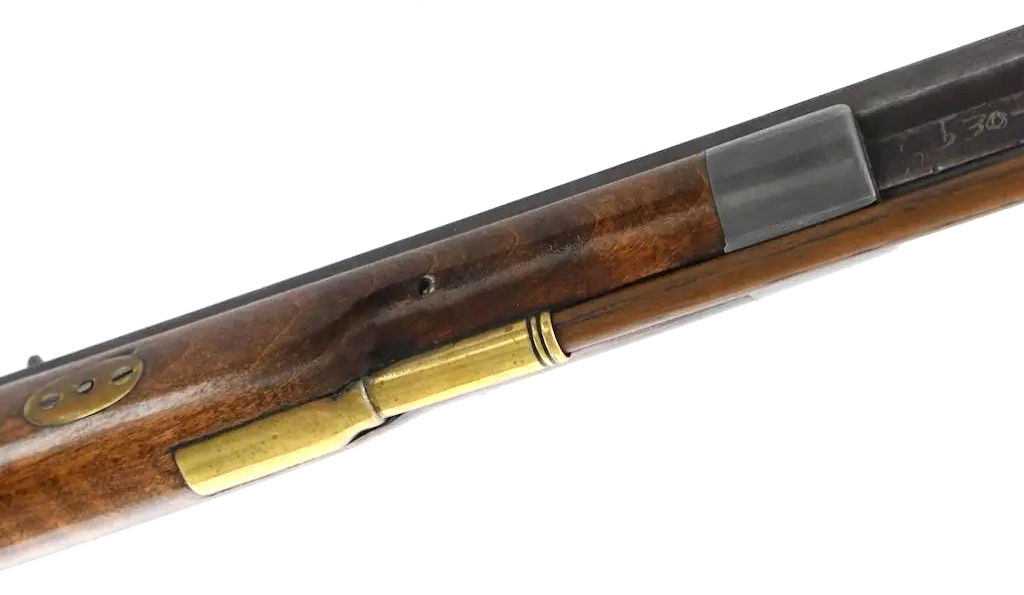
Figure No.9: This view shows the nicely shaped rear ramrod pipe and the Settles’ typical short, cast pewter nose cap on their 1850s rifles. The barrel is pinned on this later rifle, and the barrel pin escutcheons are typical ovals that are attached with small wood screws.
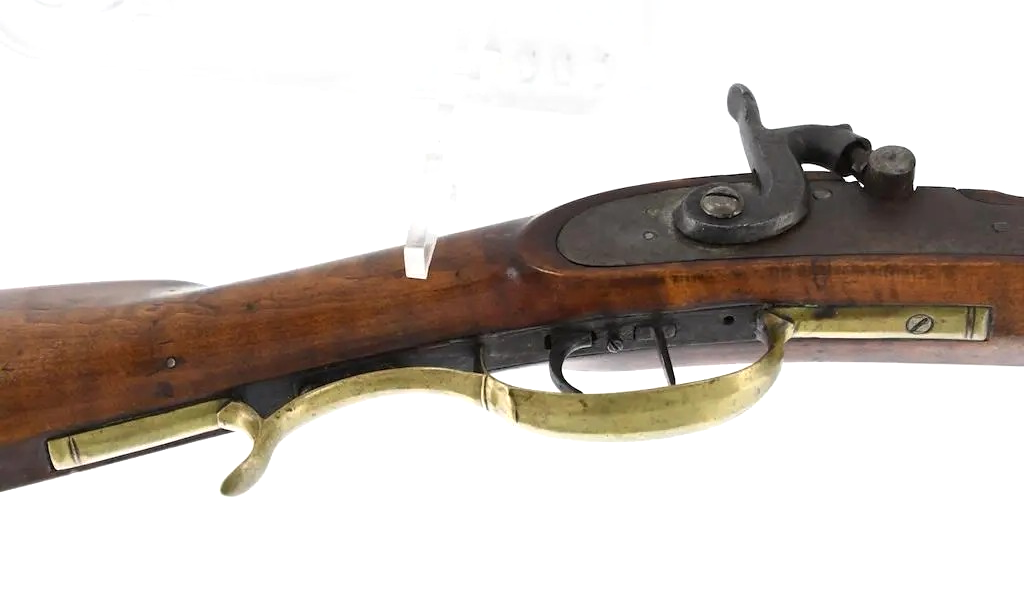
Figure No.10: The Settle rifle has a pleasing style guard without the usual second spur on later rifles. The upscale style of the gun suggests an older gentleman of some means knew exactly what he wanted in a Settle rifle, and he ordered it that way.
Summary: The Willis F. Settle auction rifle was full of surprises when examined. It had an almost unheard of full patchbox on the butt’s front side, with matching enhancements on back side consisting of a silver cheekpiece star and brass strip across the cheekpiece’s base. Compared to many mid-century Eastern rifles, the rifle doesn’t stand out in a crowd, but when compared to most of Kentucky’s known Settle rifles, the rifle’s enhancements make it an exceptional Settle rifle and one of the best known from the mid-1800s.