
A Settle Family Rifle by Reuben Mock of Washington County, Kentucky ©
Foreword: Recently, a good quality rifle with a long Kentucky history was shared with the author to help verify its maker and provide information on when and where it was made. The gun turned out to be more interesting than the author expected with a fascinating twist in its ownership. The gun’s early owners were members of the Settle family, a well-known name in early Kentucky gunmaking, but the gun actually was made by a member of the Mock family of Kentucky gunsmiths.
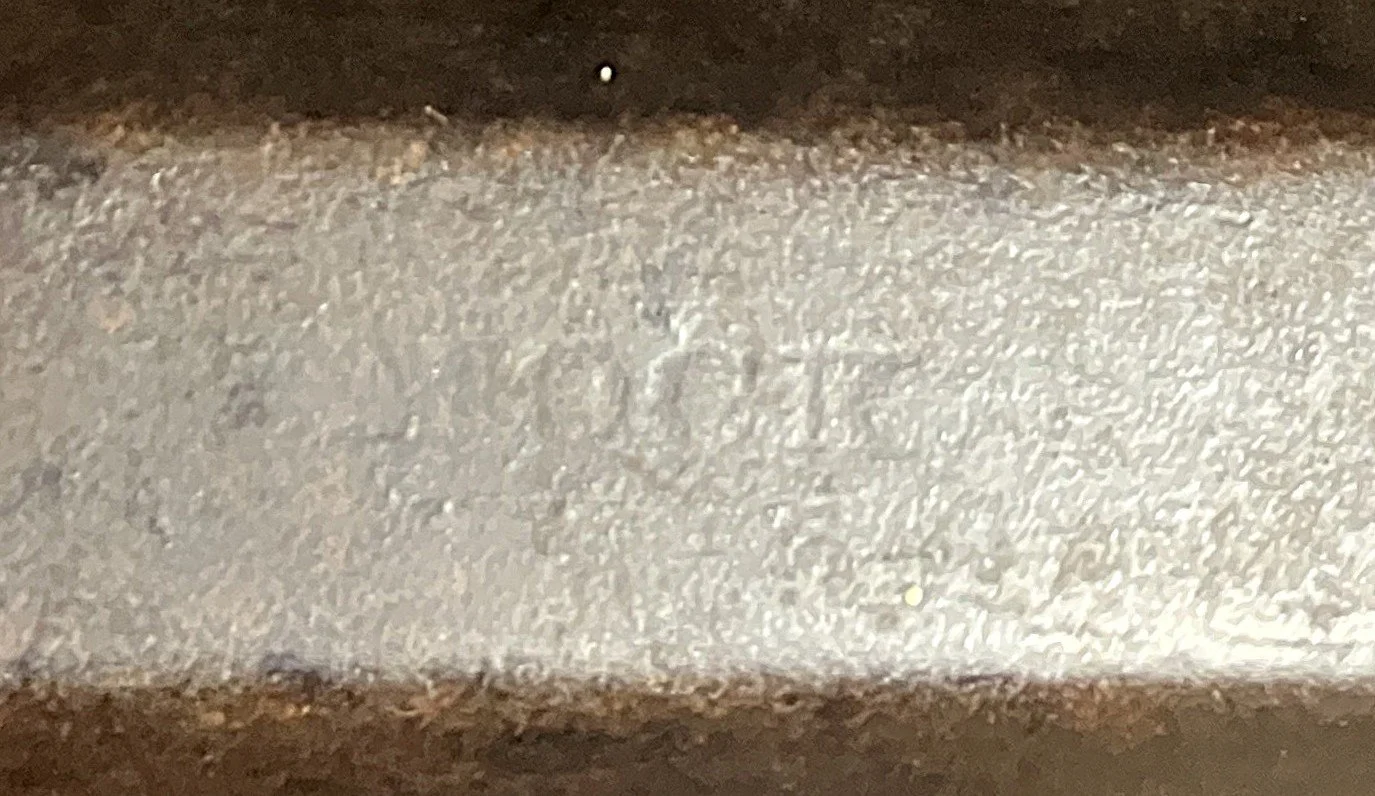
Figure No.1: The stamped name on the Mock rifle’s barrel is heavily worn and difficult to read. For years its Settle family owners thought it was a “Settle” rifle, in large part because the maker’s name was so obscured. The name has been enhanced slightly to better show the faint letters in this image. While almost invisible in this image, there is the top part of the letter “R” to the left of the name, indicating the maker was Reuben Mock. Courtesy M. Wright.
Rifle’s Background: The author was contacted by a descendant of Kentucky’s Settle family who had his family’s old heirloom rifle. Most prior family members had assumed it was a Settle rifle due to their family surname and a worn barrel stamp that was almost impossible to read. However, when the current owner got possession of the old rifle, he examined the faint barrel stamp shown in Figure No.1 and began to think it was not “Settle” but rather “Mock.” In researching Mock rifles, he came across the author’s “Kentucky Gunmakers” web site and contacted the author to verify his thoughts about the rifle and learn more about its age and origin. The author was glad to assist since he encourages contacts on old Kentucky guns and powder horns. Examination of an enhanced picture of the rifle’s worn barrel stamp verified the gunmaker’s last name was “Mock,” and a partially visible remnant of the first initial turned out to be the upper section of a capital “R.” Based on the approximate date of the rifle, its maker had to be Reuben Mock… often referred to as Reuben Mock Sr.

Figure No.2: The fresh “R. Mock” rifle is a significant gun due to being a full-stocked rifle, when most of his known guns are half-stocked. The rifle retains its original full-length barrel, original dark oxidized finish, and has survived in excellent condition except for two small “dings.” The toe has been damaged from being set down too hard, and a small plate, probably brass, once covered a burned-out area of wood under the percussion drum. Barrel: 45-3/8 inches long, .45 caliber bore, 7-groove rifling. Courtesy M. Wright.

Figure No.3: The back of the Mock rifle highlights its fine “Kentucky style” stock architecture with long barrel, slender forestock, and triangular butt. The good quality curly maple wood is visible in this picture, along with the superior condition of the gun without any significant damage or modifications. The back-action lock, guard’s double-tipped rear spur, and large, rounded cheekpiece help date the rifle to about 1840. Note the front end of the side-facing is not rounded but instead angles upward. Courtesy M. Wright.
Reuben Mock: The rifle in Figures No.2 and No.3 above dates to circa 1840 with its back-action lock, guard with double-tipped rear spur, and tall butt with large cheekpiece. The date helps identify the gunmaker as Reuben Mock Sr. (1790-1876), called “Sr.” to separate him from several younger “Reuben Mock” gunsmiths. He worked at Springfield in Washington County, Kentucky, from about 1811 until 1870. His father was gunsmith Daniel Mauk (sic) of Virginia who moved his family to Nelson County, Kentucky, in 1789 where he became the county’s first recorded gunsmith of significance. Washington County was later formed from the eastern part of Nelson County, and in 1792 Mauk moved his family to Springfield in Washington County, where he worked as a gunsmith with his brother Reuben for many years. Daniel’s son Reuben was born in 1790, trained as a gunsmith in his father’s shop, and began working as a journeyman gunsmith with his father in 1811. A year later in 1812 Reuben married Betsy Seay, daughter of Kentucky gunsmith Jacob Seay, and shortly after he began working independently as a gunsmith.
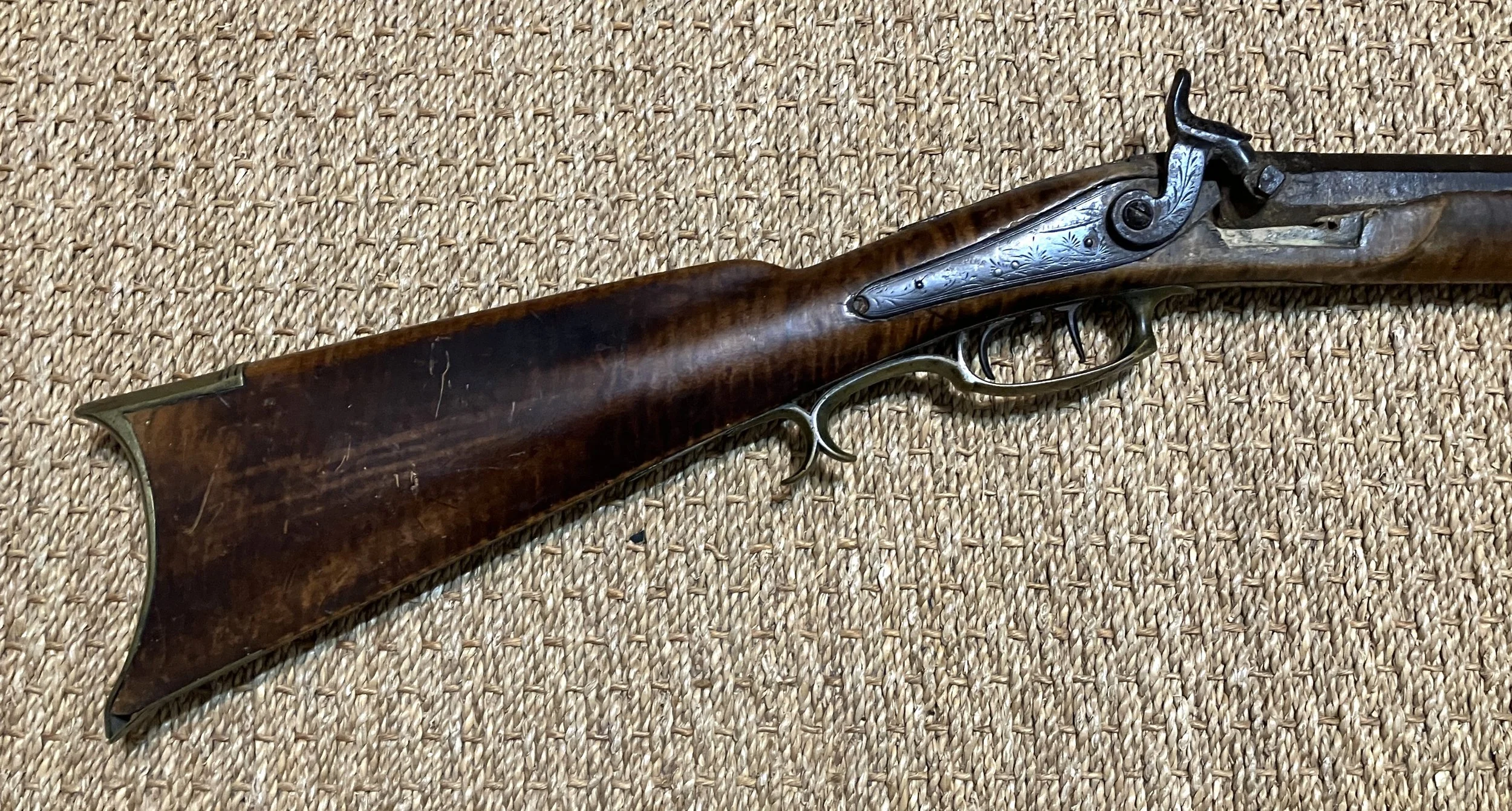
Figure No.4: This view shows the cut-out below the percussion drum where burnt out wood was removed and the cleaned-up area covered with a small metal plate now missing. The “Spies” marked lock is a common New England lock name. Courtesy M. Wright.
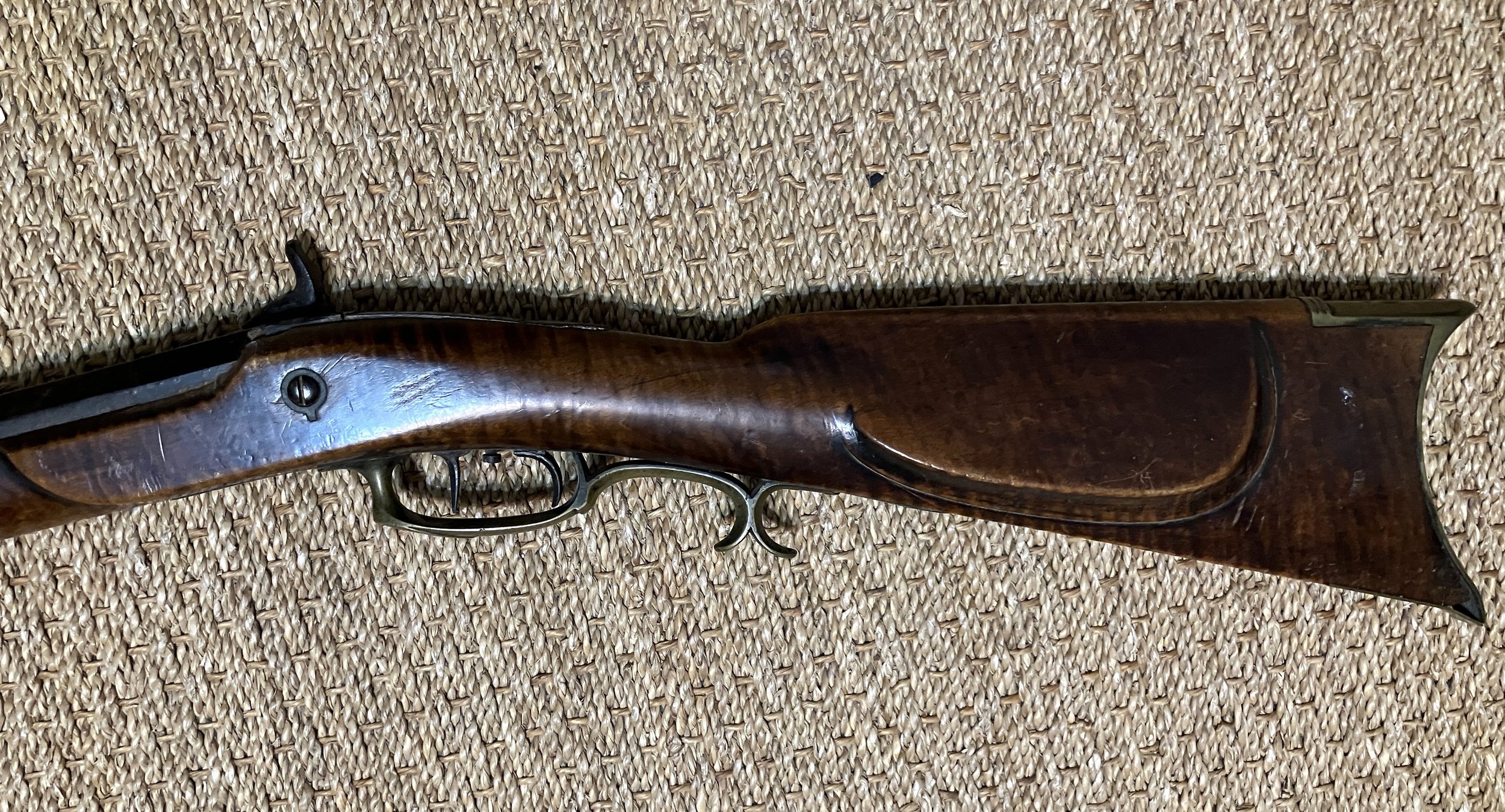
Figure No.5: A major detail on the Mock rifle is its large, heavily molded cheekpiece that enhances the rear butt. Barely visible is the gun’s long, two-screw Kentucky style tang and simple lock bolt washer with small locking tab to prevent its turning. Courtesy M. Wright.
The Mock Rifle: Reuben was known for making good quality rifles as seen in the details of his study rifle in Figures No.4 and No.5 above. The author has handled several fine Reuben Mock rifles over the years, and most have been later half-stocked guns of fine workmanship with an oval cheekpiece inlay often displaying the date of manufacture or a short sentence similar to “Reuben Mock made this rifle in 18- -.” But the new rifle is different; despite having no inlay work, it is an attractive gun with its earlier full-length stock of fine curly maple and high-grade workmanship highlighted by a beautifully oxidized/darkened original finish. While Reuben often used “beaver tail” cheekpieces on later rifles, this rifle’s butt has a larger rounded and heavily molded cheekpiece that adds interest to the back of the rifle. Overall, it is a well-built, attractive rifle that relies on superior workmanship and stock architecture for its eye appeal rather than decorative inlay work or carving.
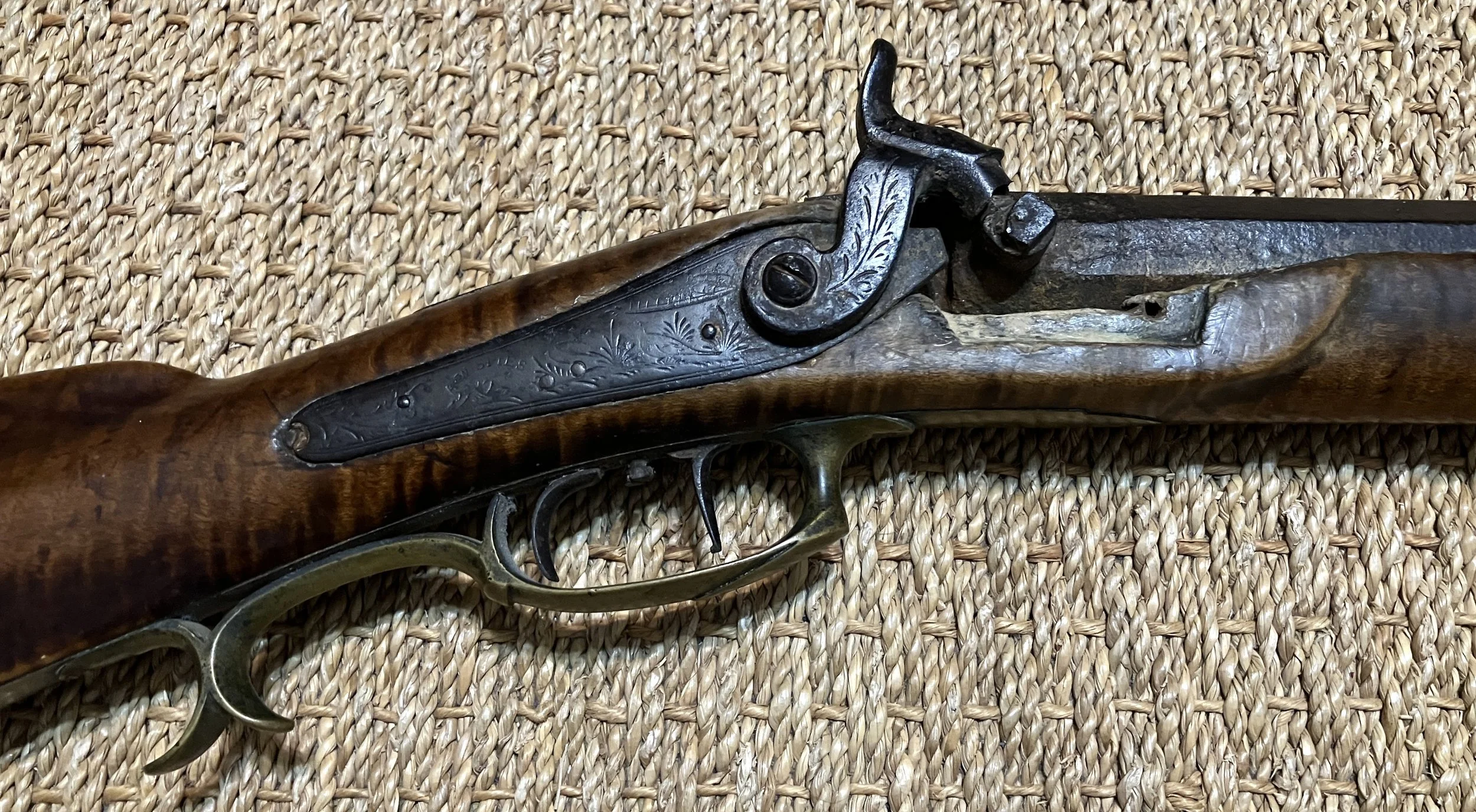
Figure No.6: The trigger guard has details of a Kentucky Bluegrass gun in its heavy front post and simple joint where the grip rail meets the bow. Note the cutout for a filler plate below the percussion drum and the drum’s squared off end. Courtesy M. Wright.
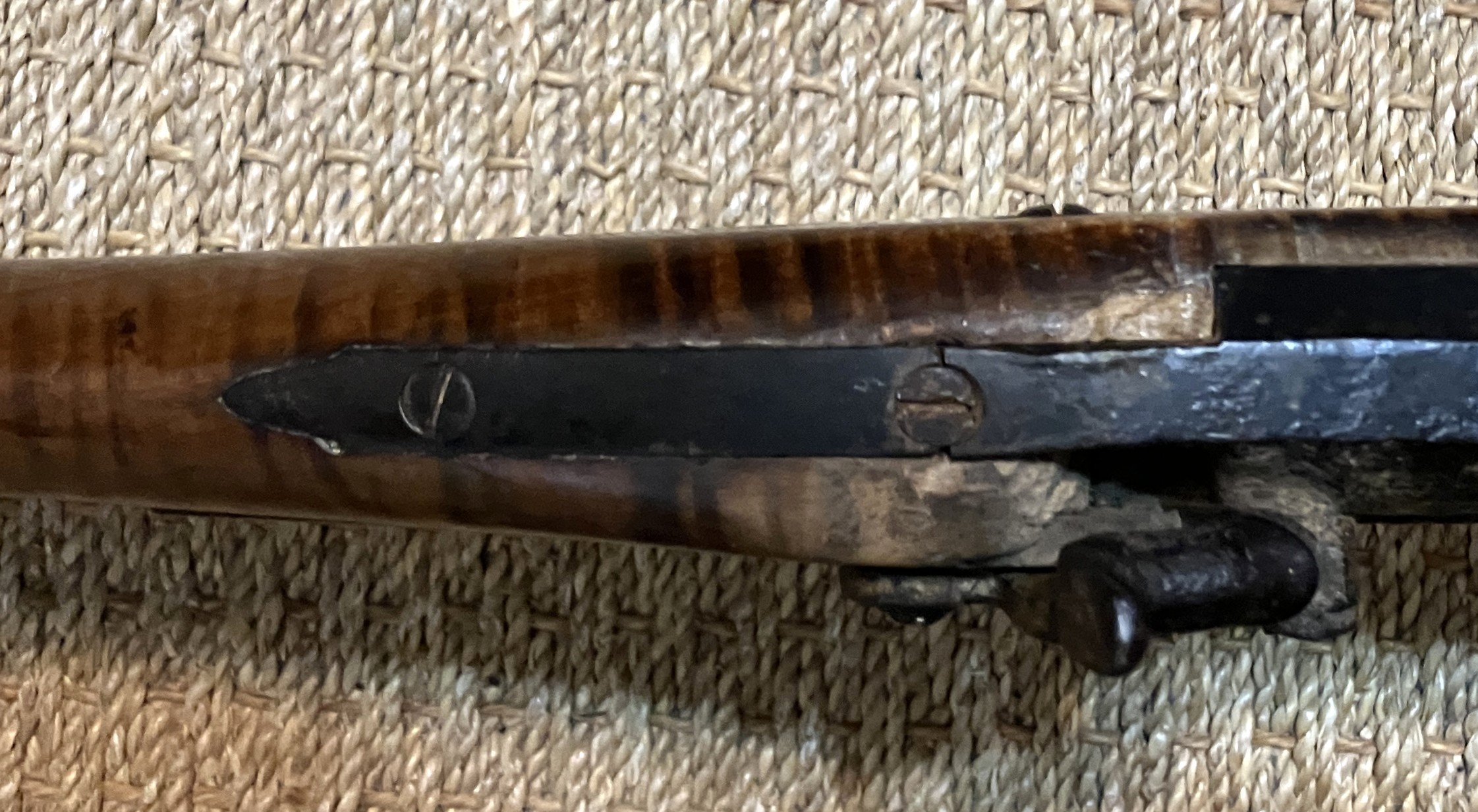
Figure No.7: The Mock rifle’s tang is typical for central Kentucky with its extra length and two screws, or actually a tang bolt with lower tail screw. The rifle has been well used as indicated by the burned-out wood behind the percussion drum. Courtesy M. Wright.
Surviving Accoutrements: After the author had familiarized himself with the “R. Mock” rifle, the owner mentioned he also had the rifle’s original accoutrements including a damaged hunting bag & horn and bullet mold. Many accoutrements found with Kentucky’s early rifles were discarded back in the 1950s-1960s era when the leather was “falling apart” or the horn and bullet mold thought to have little value compared to the rifle. There was a lack of awareness of how important those supporting items would become in the future. Later researchers and collectors began to understand and appreciate accoutrements and more complete outfits, since the outfits told a more accurate story of our early frontiersmen and what they needed to keep their rifles functional and themselves alive. Complete surviving outfits with Kentucky guns are rare these days. The author asked the owner for photos of the rifle’s accoutrements, and the owner provided images of the surviving hunting bag & powder horn seen in Figure No.8 below, and the bullet mold seen in Figure No.9, which have been with the rifle through many years and generations.
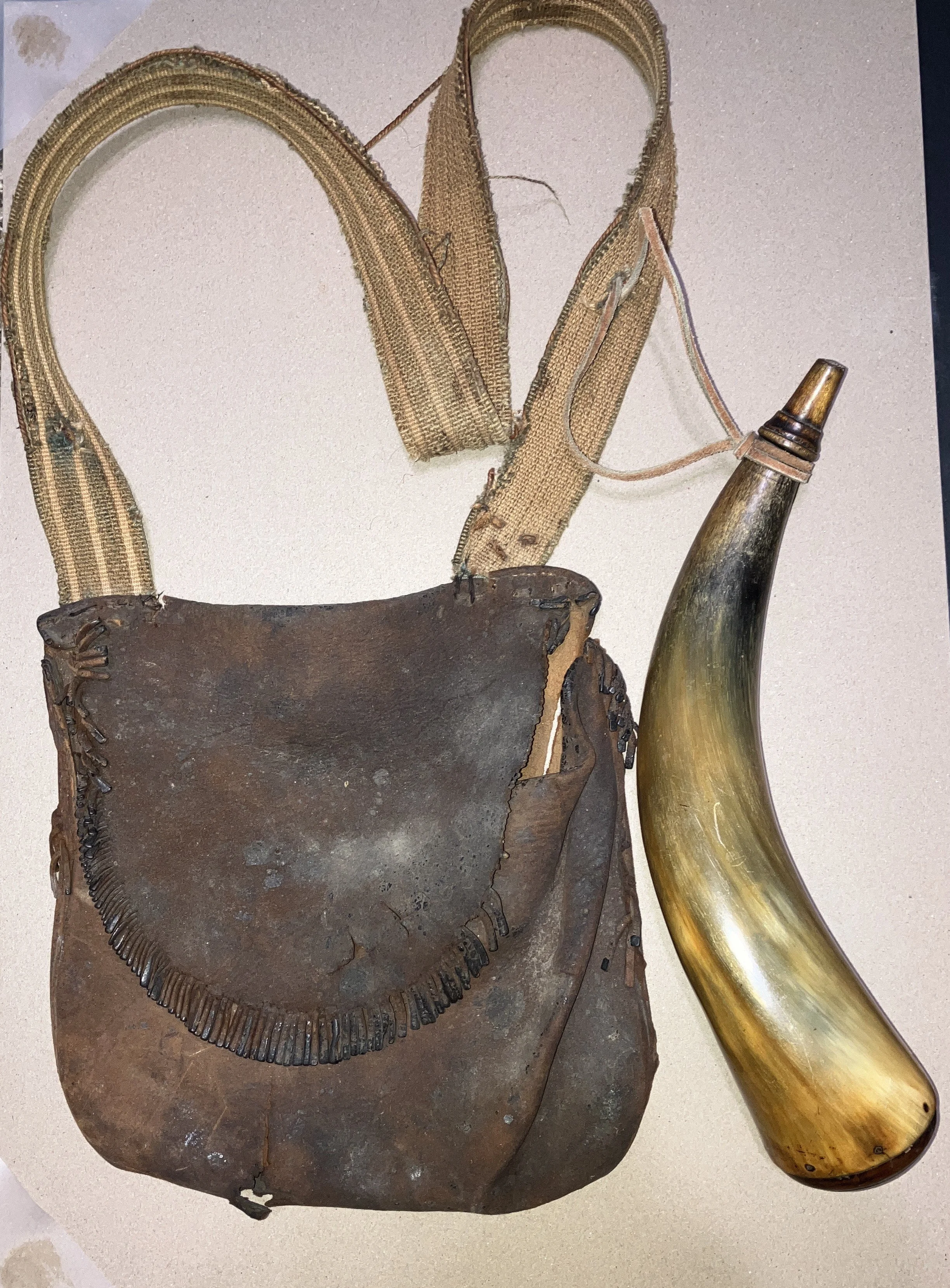
Figure No.8: The old bag & horn outfit is in decent shape for its many years of use followed by years of storage. The original leather strap was replaced by a woven strap during the bag’s working life, and the original leather thongs for attaching the powder horn are long gone. But the horn has a nicely shaped spout and turned butt plug, and the bag’s flap is fringed. Courtesy M. Wright.
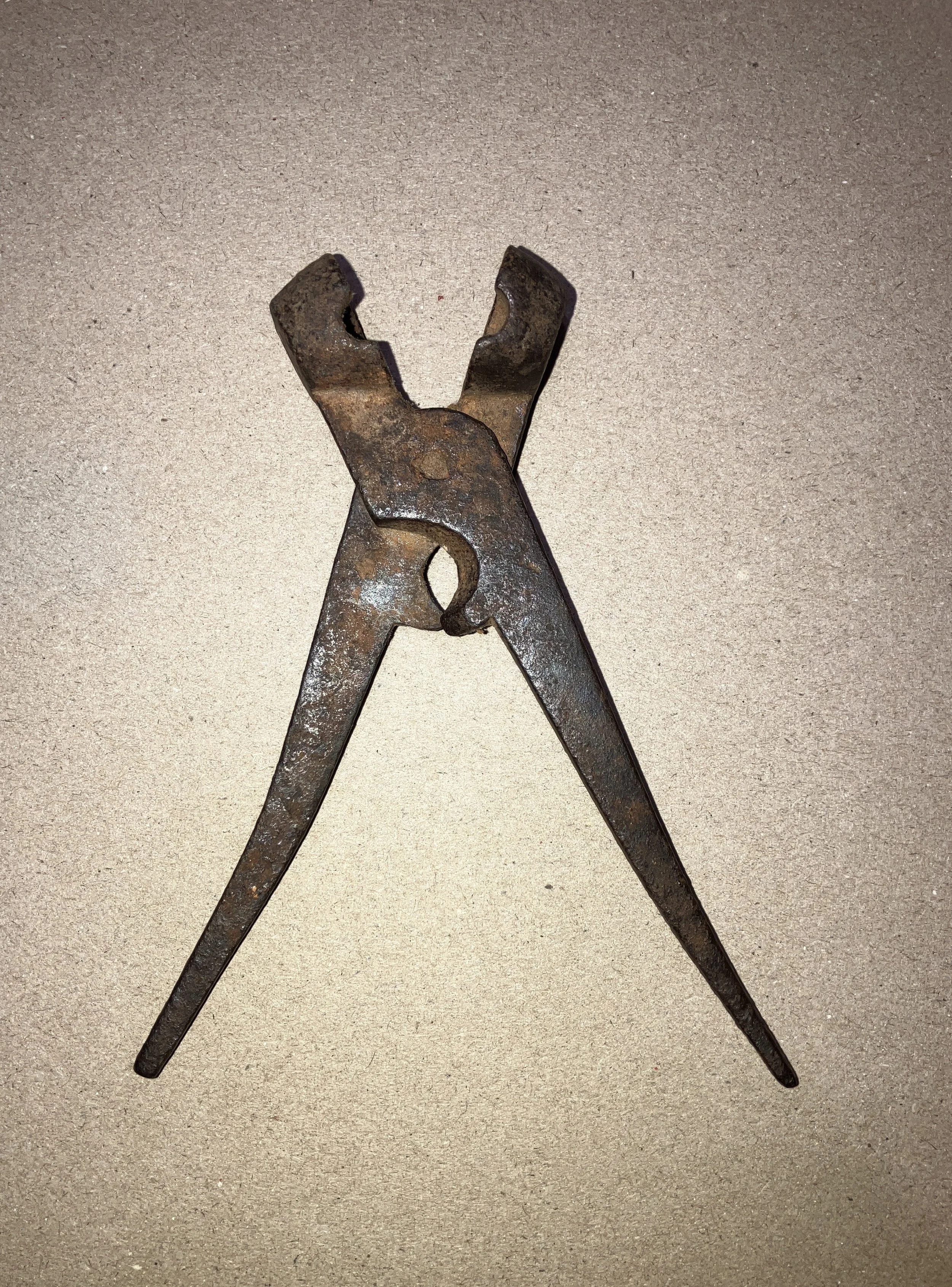
Figure No.9: The old bullet mold accompanying the Mock rifle is rusty and a bit crude for a Mock rifle. The rifle was probably “freshened” by recutting the rifling during its working years [indicated by its large bore] and this may be a second mold for the rifle. Note the handles are tapered for stabbing into corn cobs or pieces of wood to insulate them. Courtesy M. Wright.
The Mock rifle’s original bag & horn set and surviving bullet mold shown above in Figures No.8 and No.9 are rare surviving accoutrements seldom found with original rifles, since most rifles lost their supporting tools years ago. The odd coincidence of a branch of the Settle family in Kentucky owning a Mock rifle instead of a Settle rifle, and the survival of most of the rifle’s accoutrements, combine to make an interesting story that deserves to be documented and shared with others. The author wants to thank the rifle’s current owner for contacting him and sharing his family heirlooms and relating their histories. His family rifle and its accoutrements can now be shared with others interested in Mock rifles and Kentucky’s early firearms history. Reuben Mock Sr. made superior quality rifles and was a well-known gunmaker in central Kentucky, and this Mock rifle is a good example of his work and has been made even more interesting by its Settle/Mock provenance and original surviving accoutrements.